Markets · YEAR END OUTLOOK · SEPTEMBER 14, 2026
The Road to Year End: Earnings, Interest Rates and What Comes Next
The key market dates through December 2026, and the questions that matter beyond the headlines.
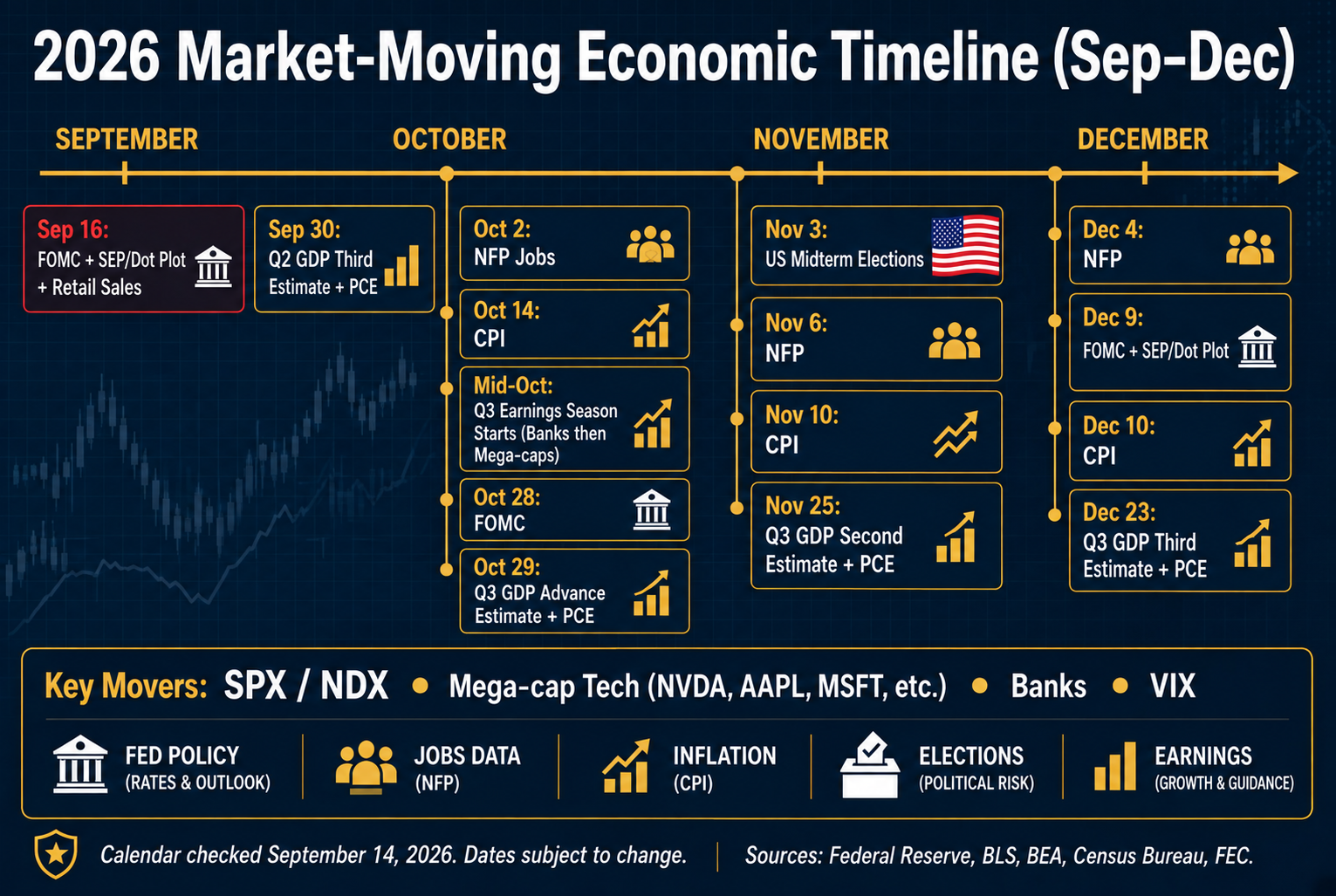
The final months of 2026 bring three major tests for investors: corporate earnings, inflation and the path of interest rates. November’s midterm elections add another source of uncertainty.
Our central question is straightforward: Can companies grow their cash flows fast enough to justify their valuations and financing costs?
The calendar tells us when new evidence arrives. It does not tell us which direction stocks will move.
September: The Fed sets the next expectations
September 16 brings the Federal Reserve’s policy decision and updated economic projections, including the “dot plot” of officials’ interest rate expectations. Retail sales are also scheduled that morning. September 30 brings the third estimate of second quarter GDP and the August PCE inflation report. [1][2][3]
We will watch whether consumer spending remains resilient and whether the Fed’s outlook differs from what investors already expect. The dots represent individual projections, not a promise about future policy.
October: Earnings must support the story
| Date | What to watch |
|---|---|
| October 2 | September jobs report |
| October 13 | JPMorgan’s scheduled earnings call |
| October 14 | September CPI inflation |
| October 28 | Fed policy decision |
| October 29 | First estimate of Q3 GDP and September PCE |
Dates are drawn from official agency and company calendars. [1][3][4][5]
Earnings will be our main company research focus. Banks can provide evidence about credit quality and consumer finances. Technology companies can reveal whether AI investment is translating into revenue, margins and cash.
Our checklist goes beyond a headline beat:
- Growth: Is demand strengthening, or are price increases doing most of the work?
- Profitability: Are margins improving sustainably?
- Cash: How much remains after investment?
- Guidance: Does management’s outlook support expectations for 2027?
Individual company reporting dates will be added as they are confirmed.
November: Elections meet the earnings outlook
| Date | What to watch |
|---|---|
| November 3 | US midterm elections |
| November 6 | October jobs report |
| November 10 | October CPI inflation |
| November 25 | Second estimate of Q3 GDP and October PCE |
These are the currently scheduled dates. [3][6][7]
Election results may change expectations for taxes, spending and regulation. We will distinguish proposals from policies that can actually be implemented.
For company analysis, the useful question is specific: Does the outcome change expected revenue, costs or investment requirements? A political headline alone is insufficient to revise a valuation.
December: The market starts judging 2027
| Date | What to watch |
|---|---|
| December 4 | November jobs report |
| December 9 | Fed decision and updated economic projections |
| December 10 | November CPI inflation |
| December 23 | Third estimate of Q3 GDP and November PCE |
The December CPI release follows the Fed decision, making the sequence particularly worth watching. [1][3][8]
By this stage, our focus will increasingly shift toward whether companies can deliver the earnings and cash flows investors expect in 2027.
Our approach through year end
We will compare each release with expectations, then examine what changes for individual businesses.
Higher rates can pressure valuations and financing costs, but stronger cash flows may offset part of that pressure. Lower rates can help sentiment, but cannot repair a weak business model by themselves.
For each opportunity, we want three things to align: a defensible valuation, a credible catalyst and improving price action.
The objective is to build a clear record of what we expected, what happened and whether the evidence changed our view.
Calendar verified September 14, 2026. Selected events only; schedules may change.